How to measure your child's height at home
Morning gives the most accurate result: during the day the spine “settles” a little, and the difference can be up to a centimetre.
Read more
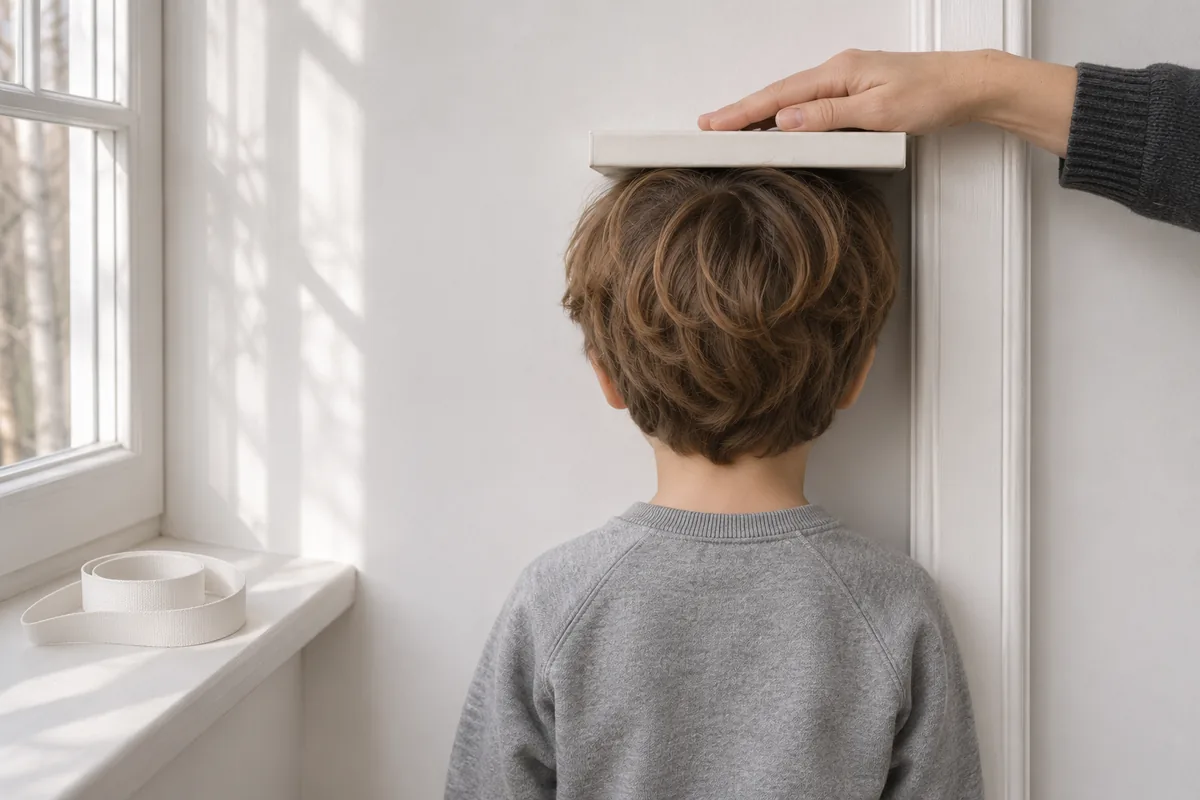
Take off your child's shoes and any thick-soled socks. Ask them to stand with their back to a wall or doorframe: heels, bottom and shoulder blades touching the wall, looking straight ahead.
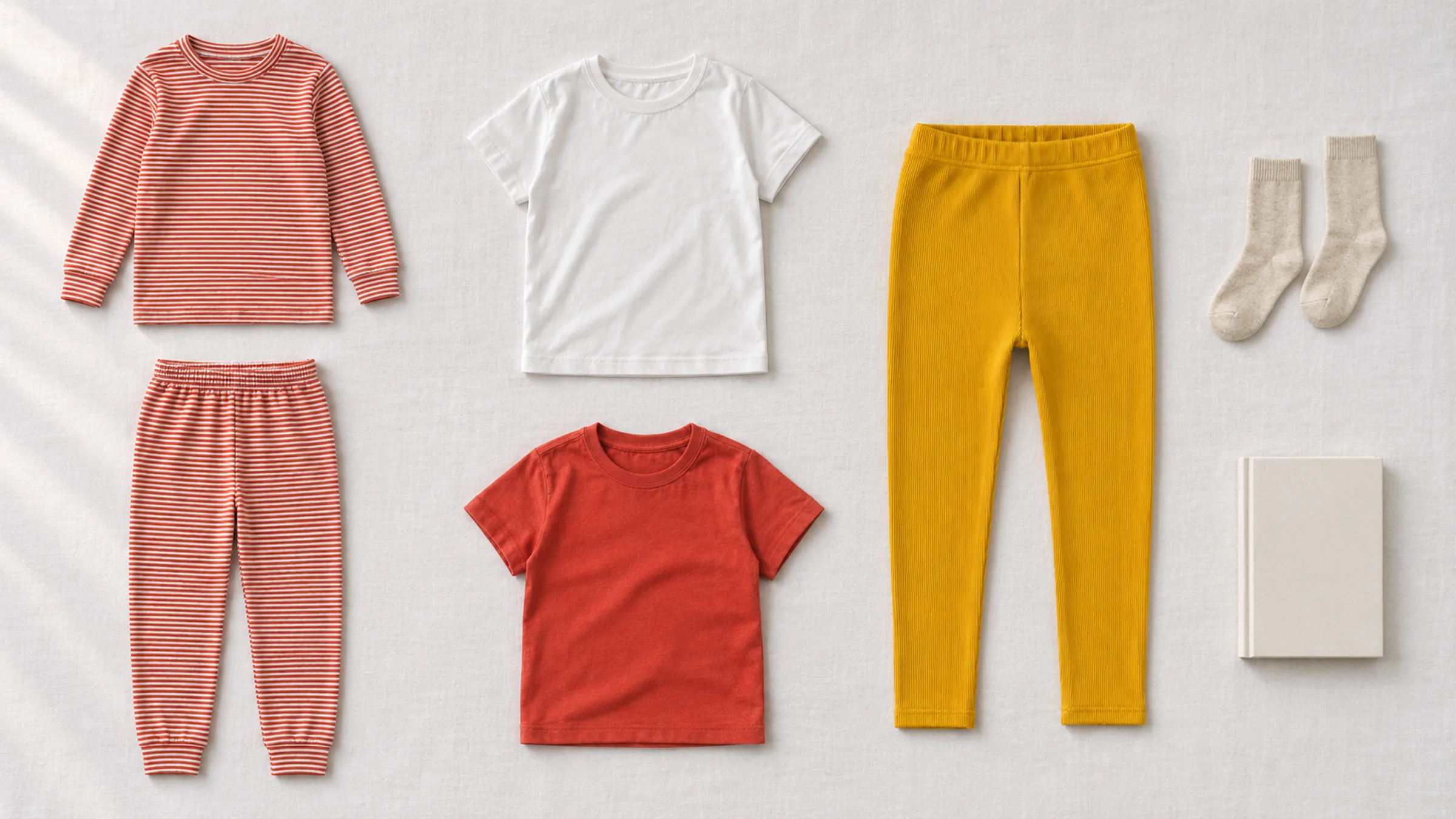
Place a hardback book on top of the head at a right angle to the wall and make a pencil mark. Measure from the floor to the mark with a tape measure. Babies under one are measured lying down — from the top of the head to the heels.
If the height is between two sizes, take the bigger one. If there's only 1–2 cm to the next size and the item is for winter, go one size up.
Layer by layer: how to dress your child for winter
Three layers are warmer than one thick one: air stays between them, and it's easy to take one off indoors.
Read more
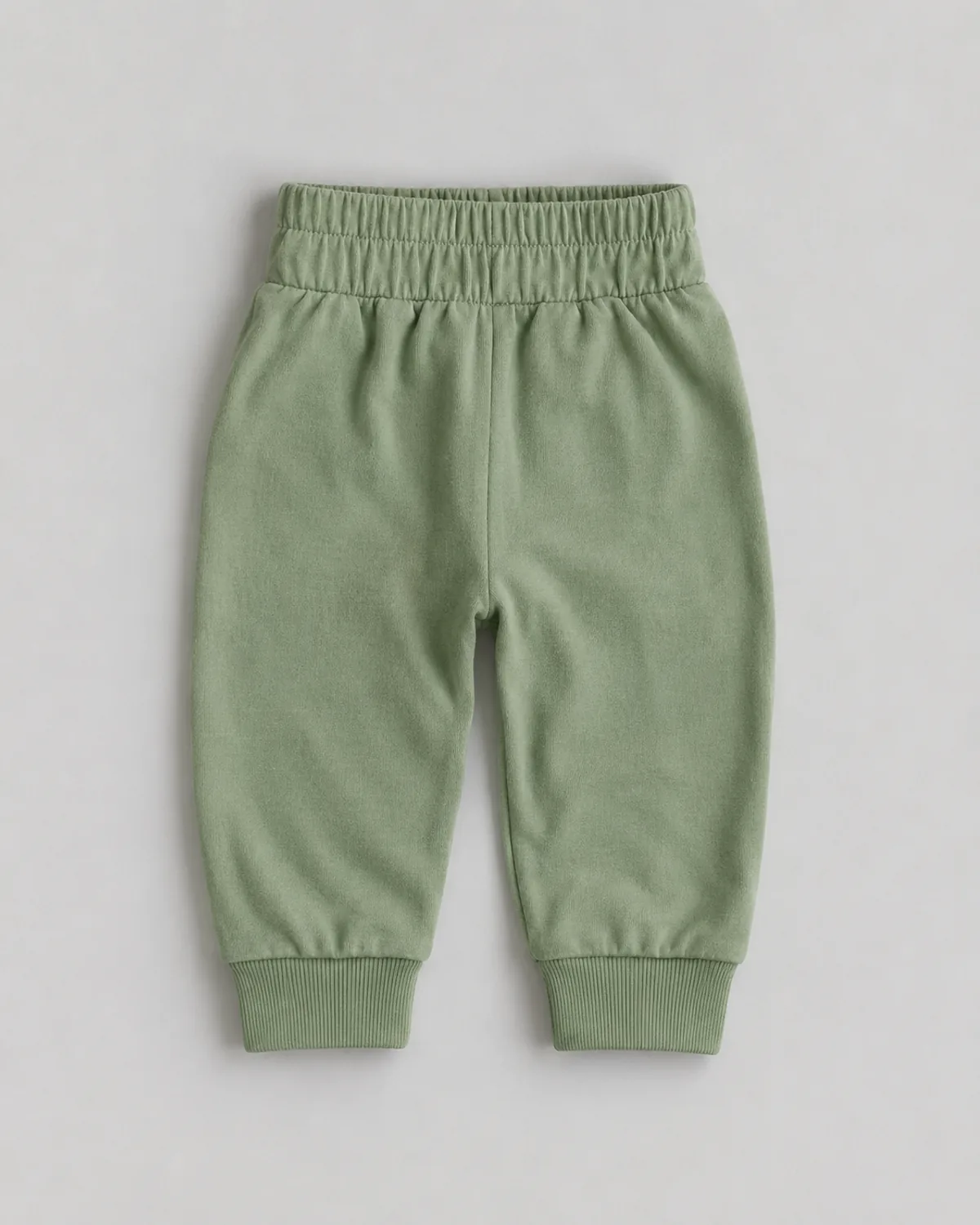
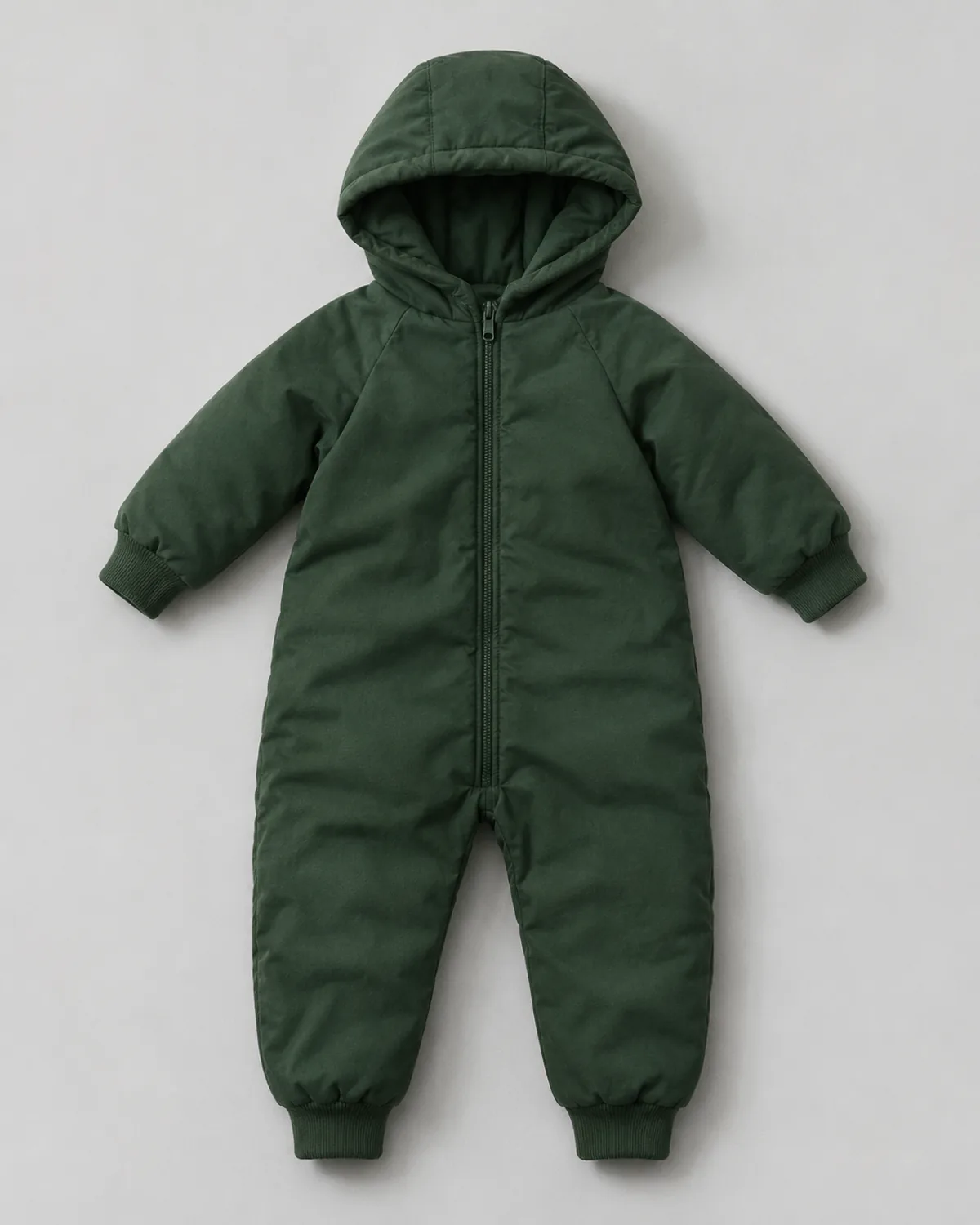
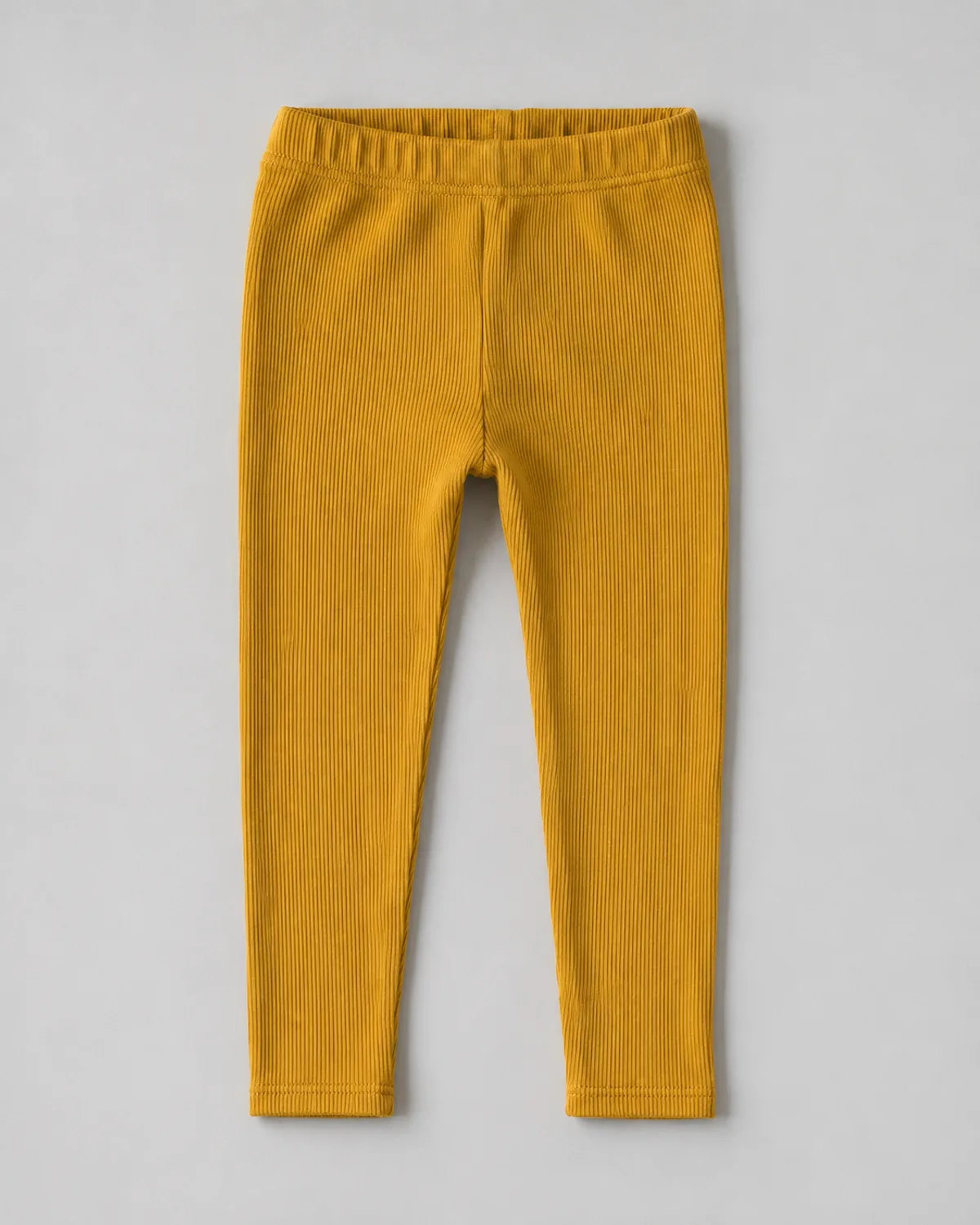
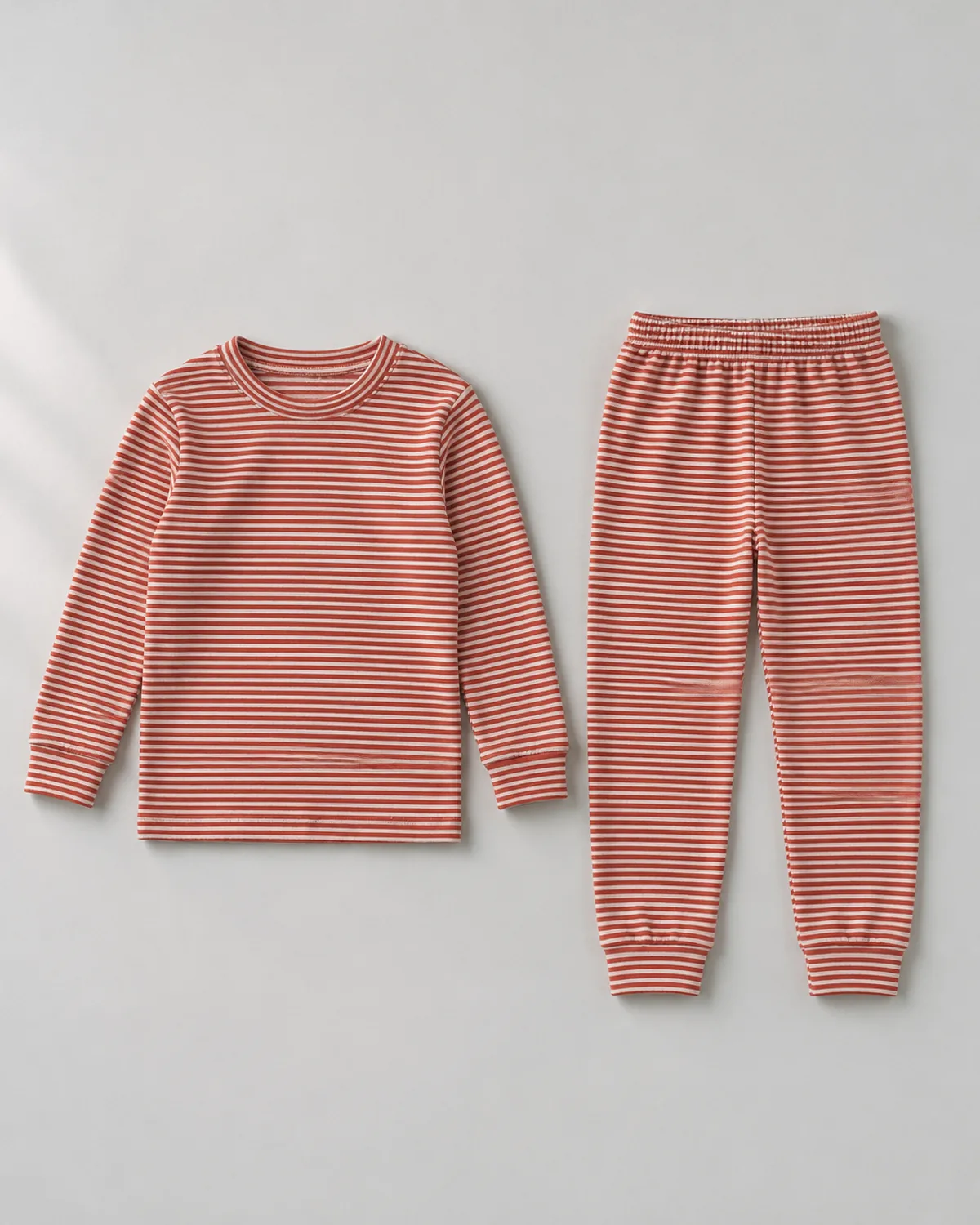
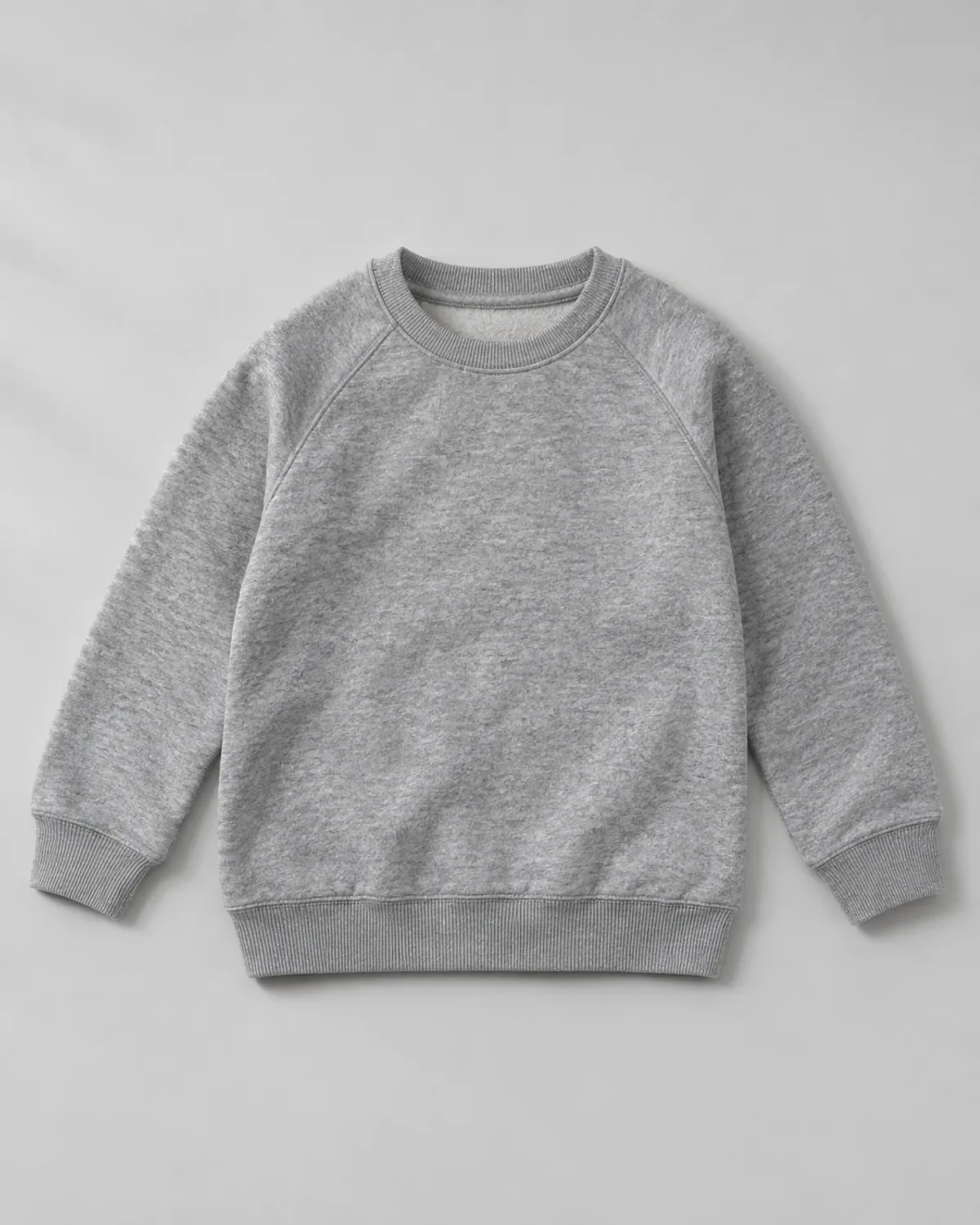
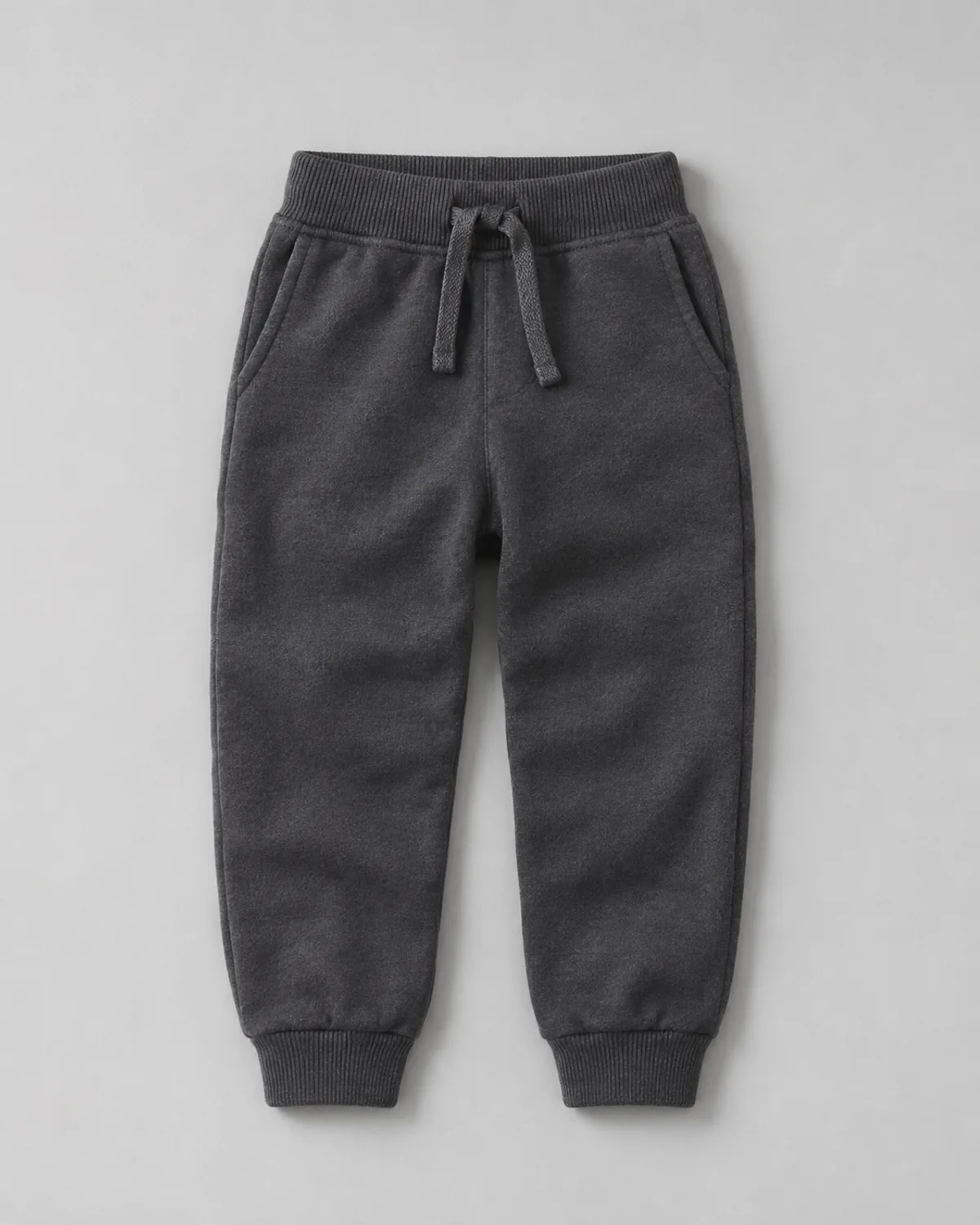
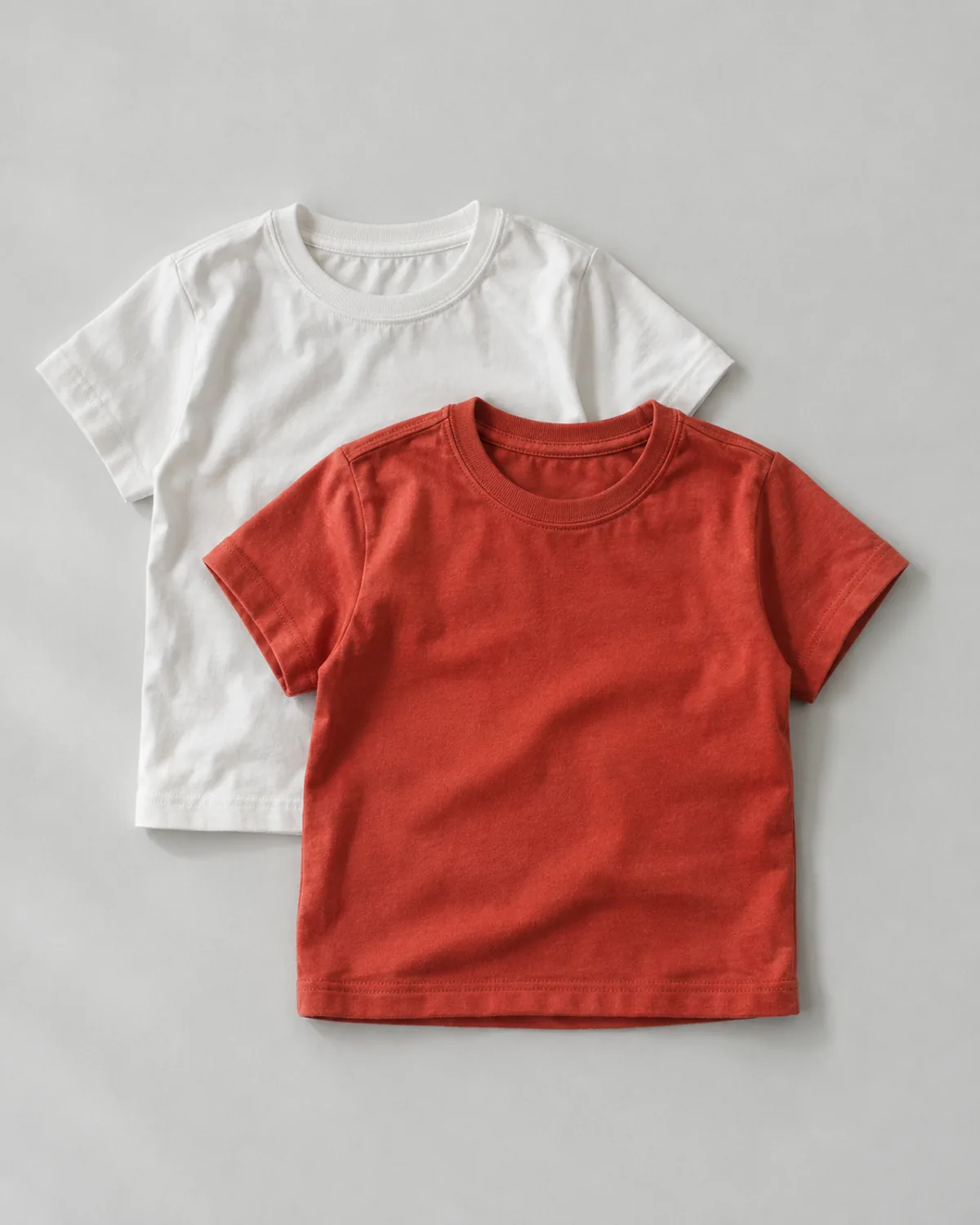
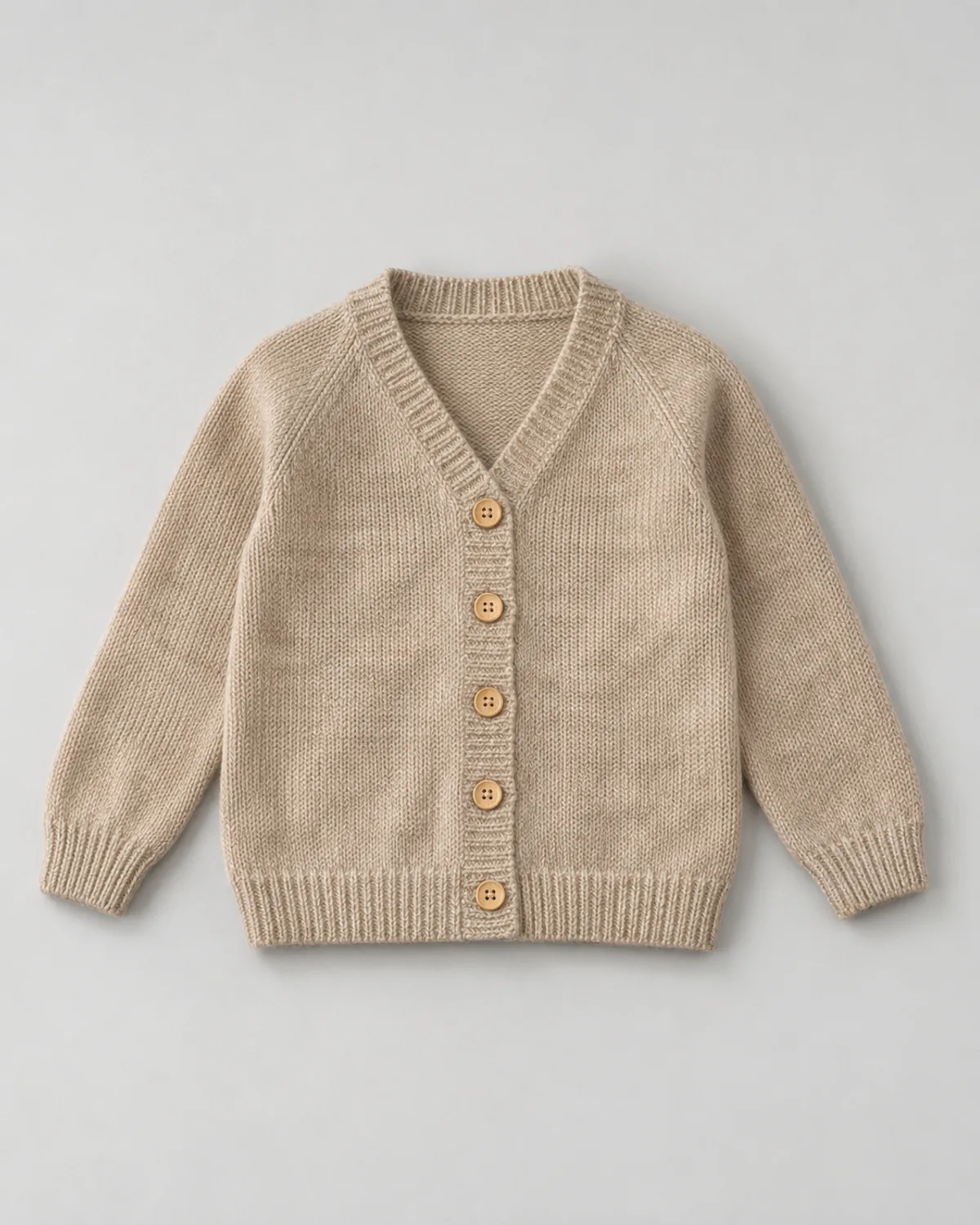
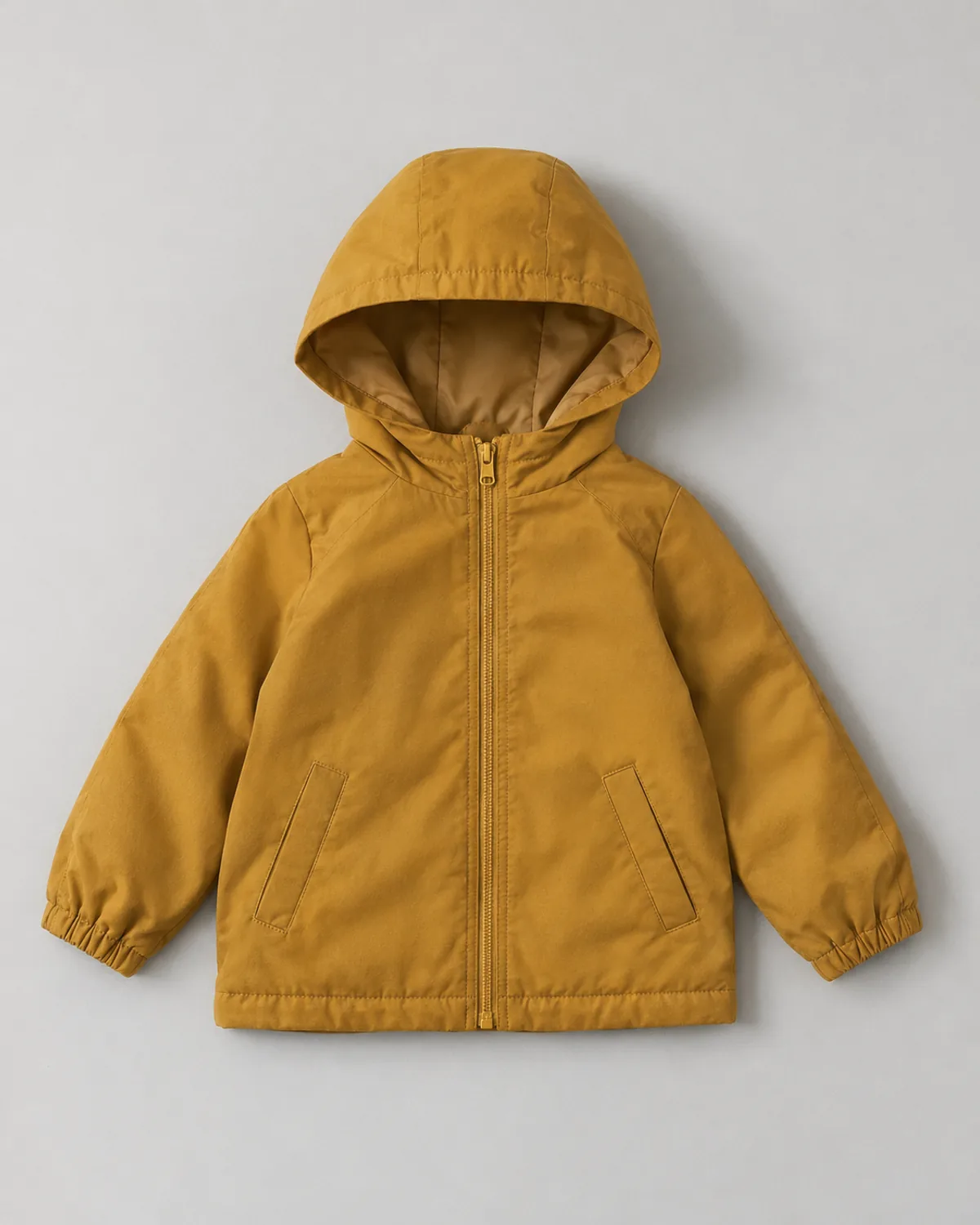
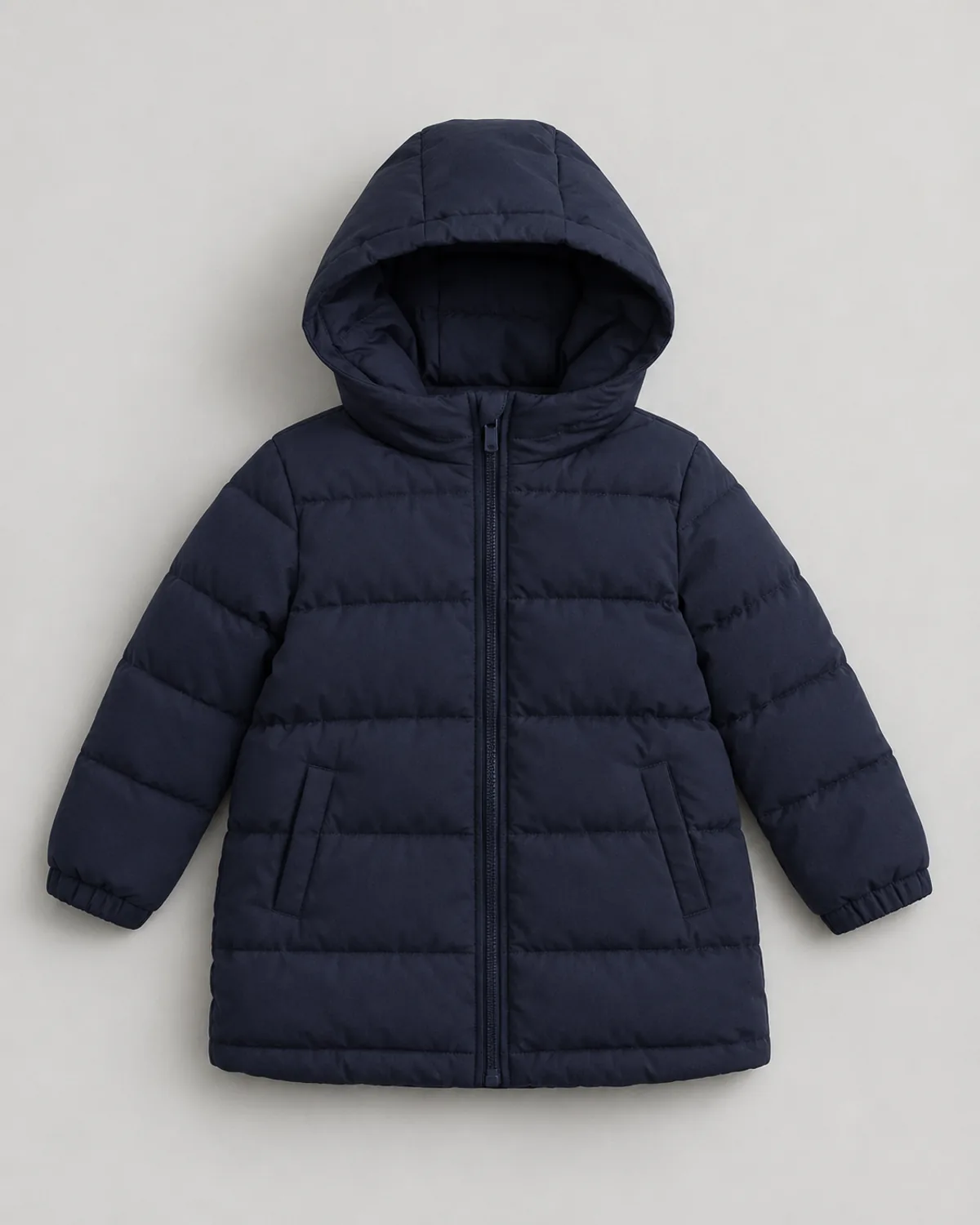
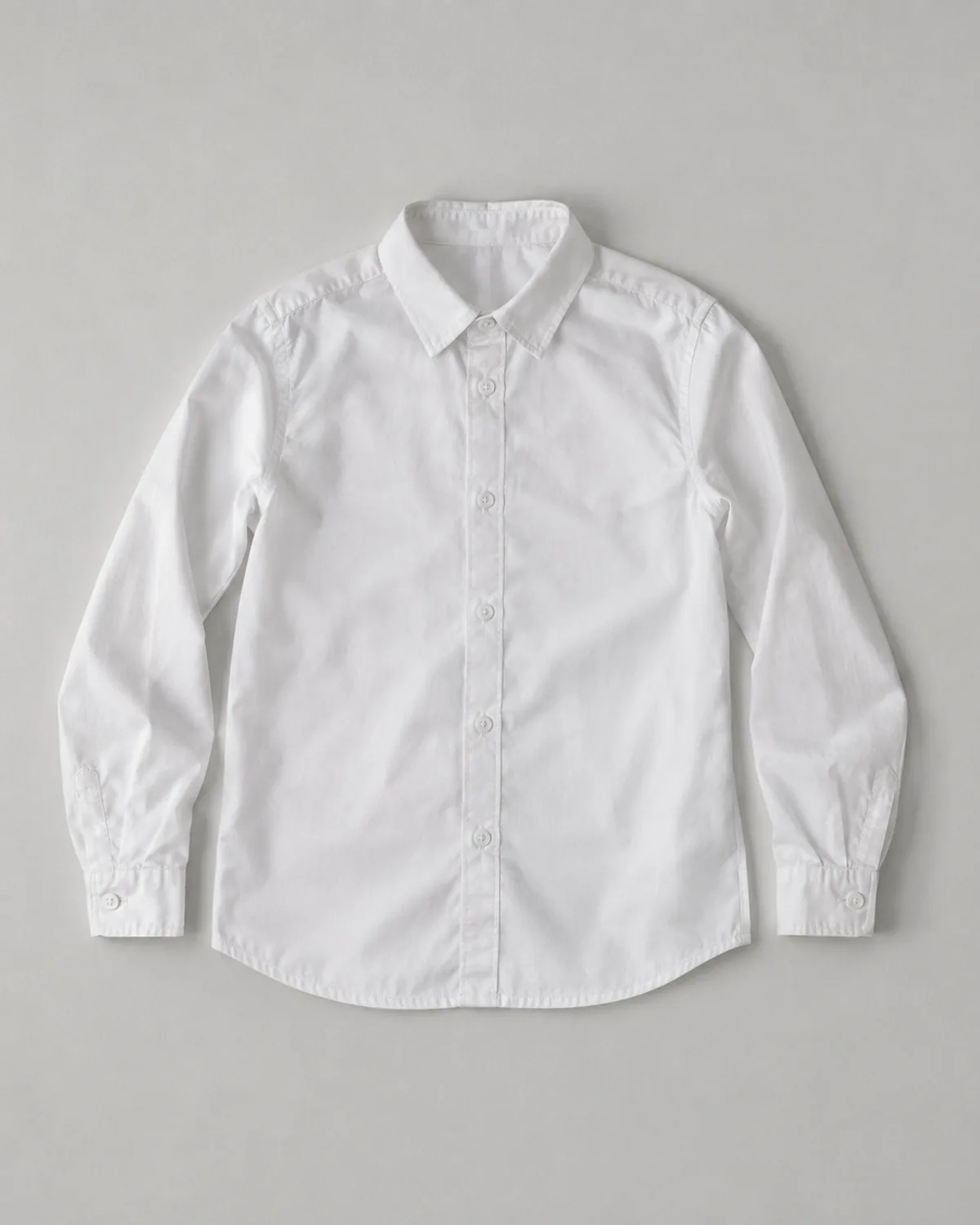
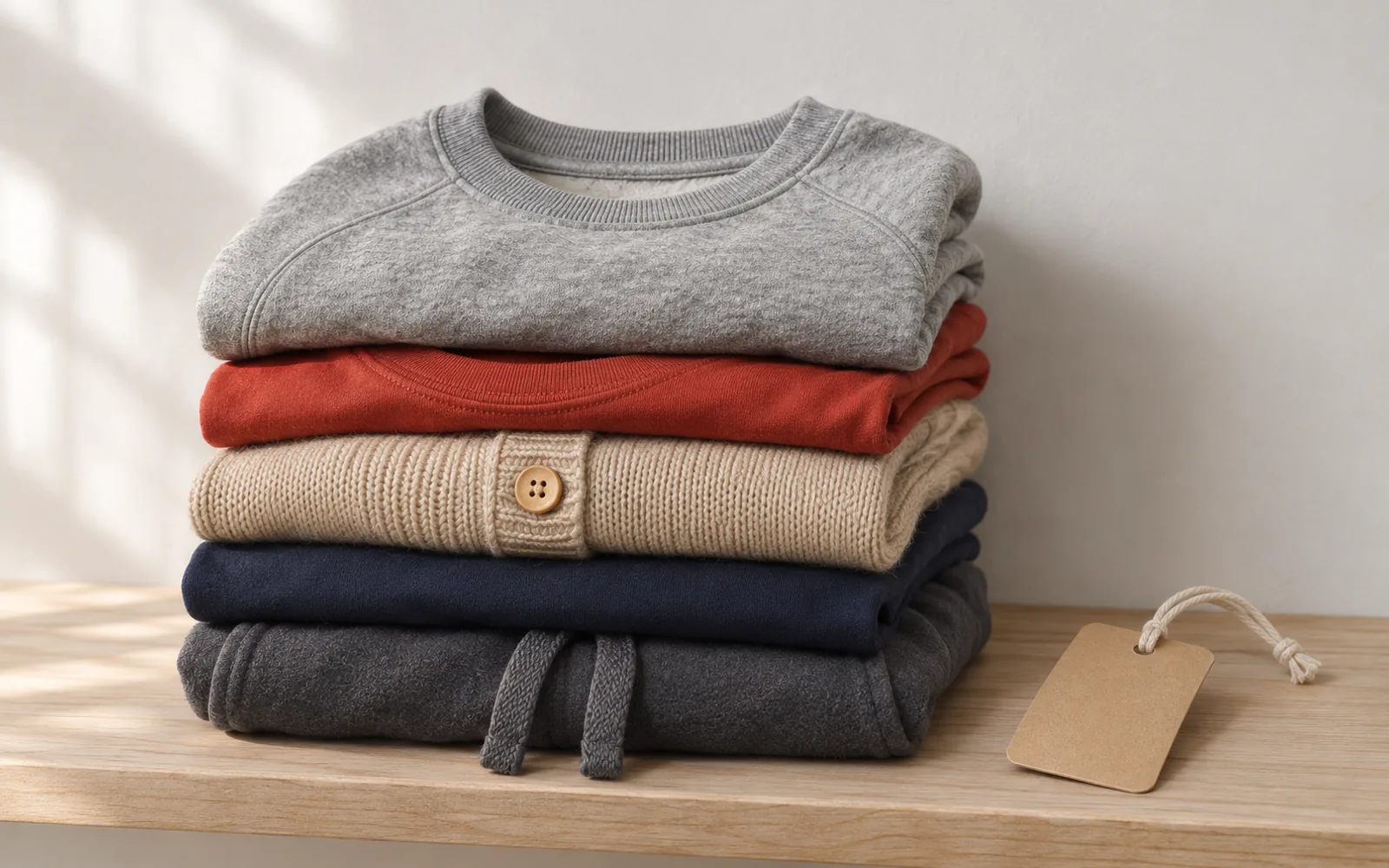
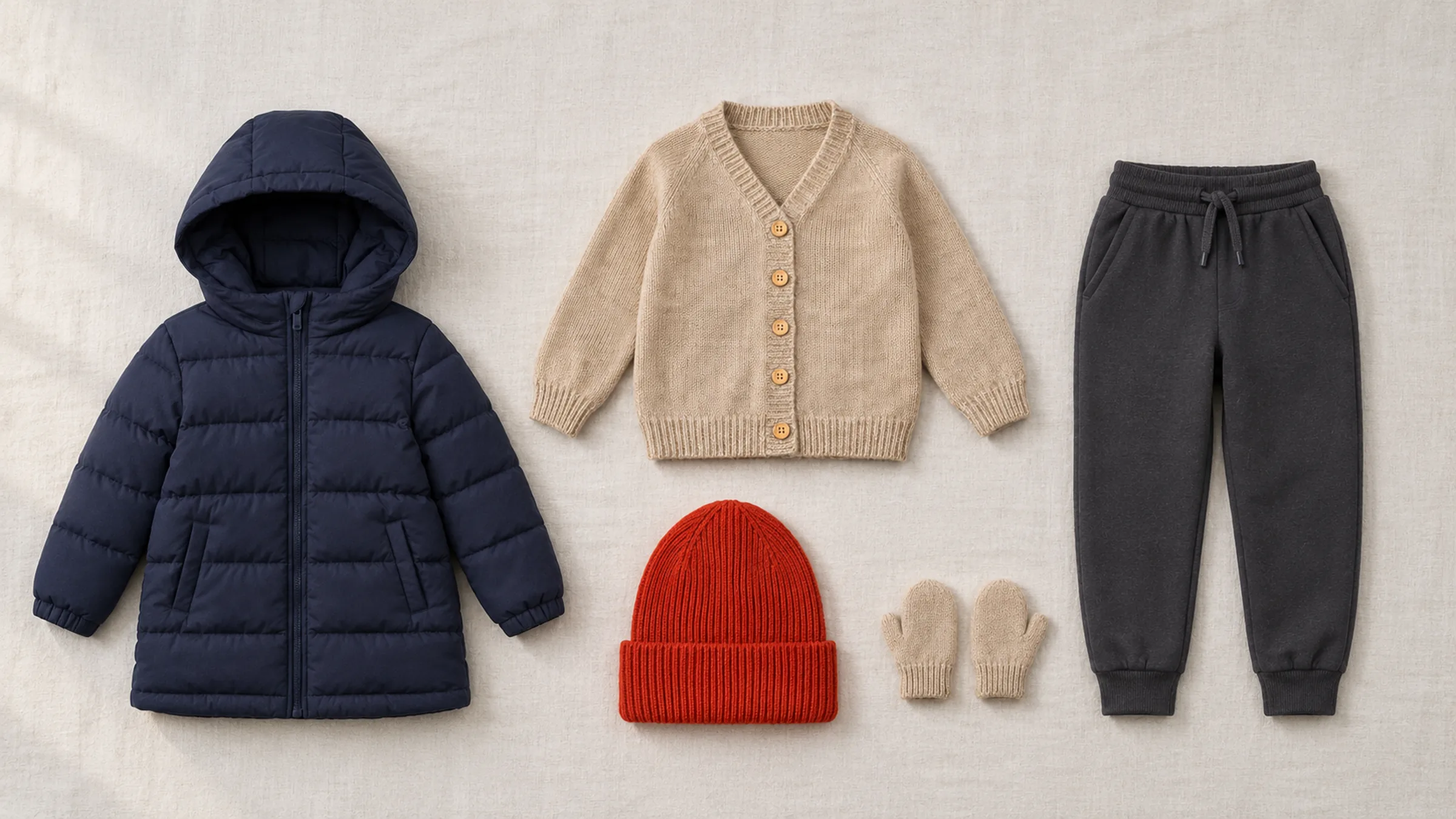
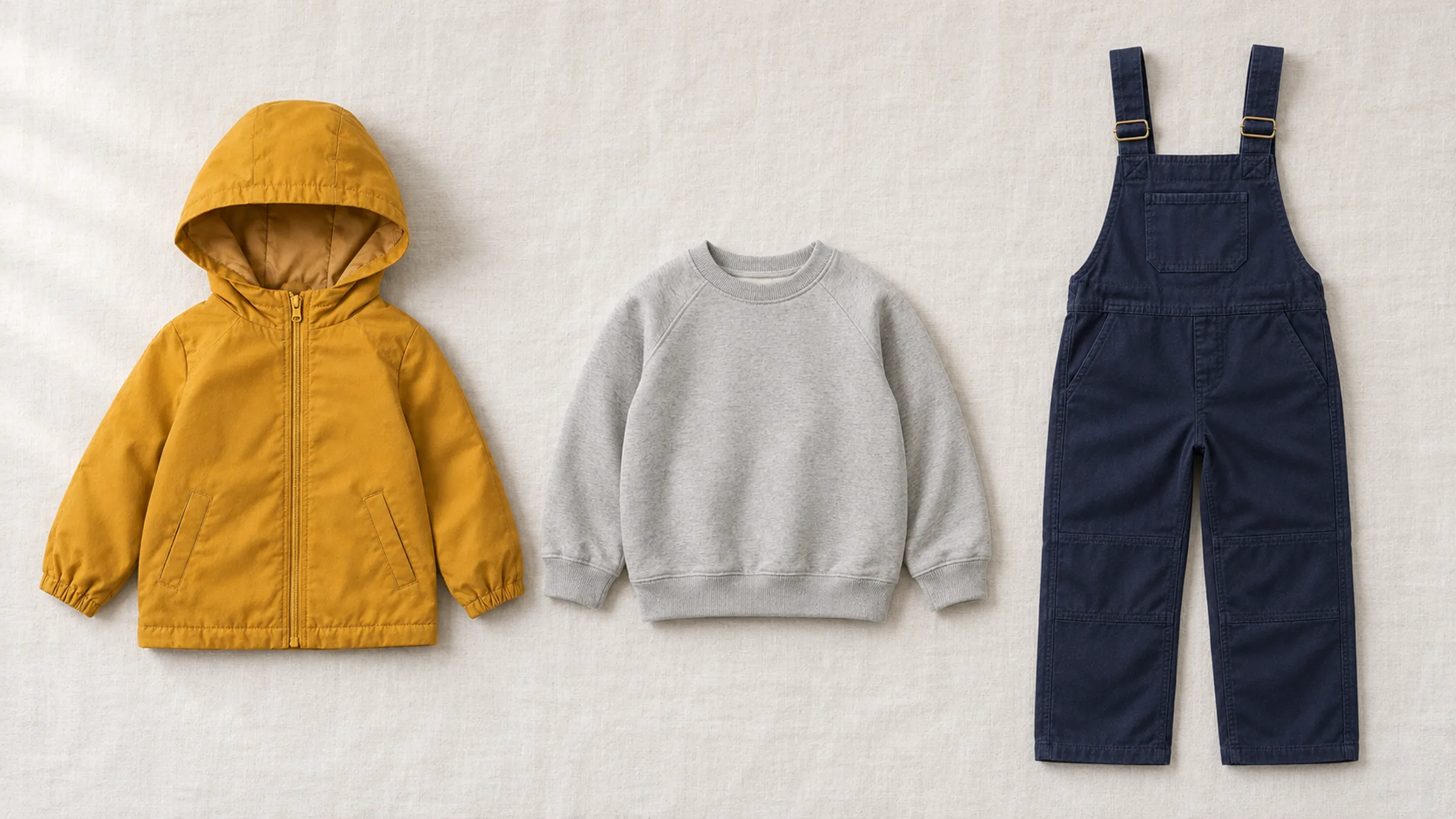
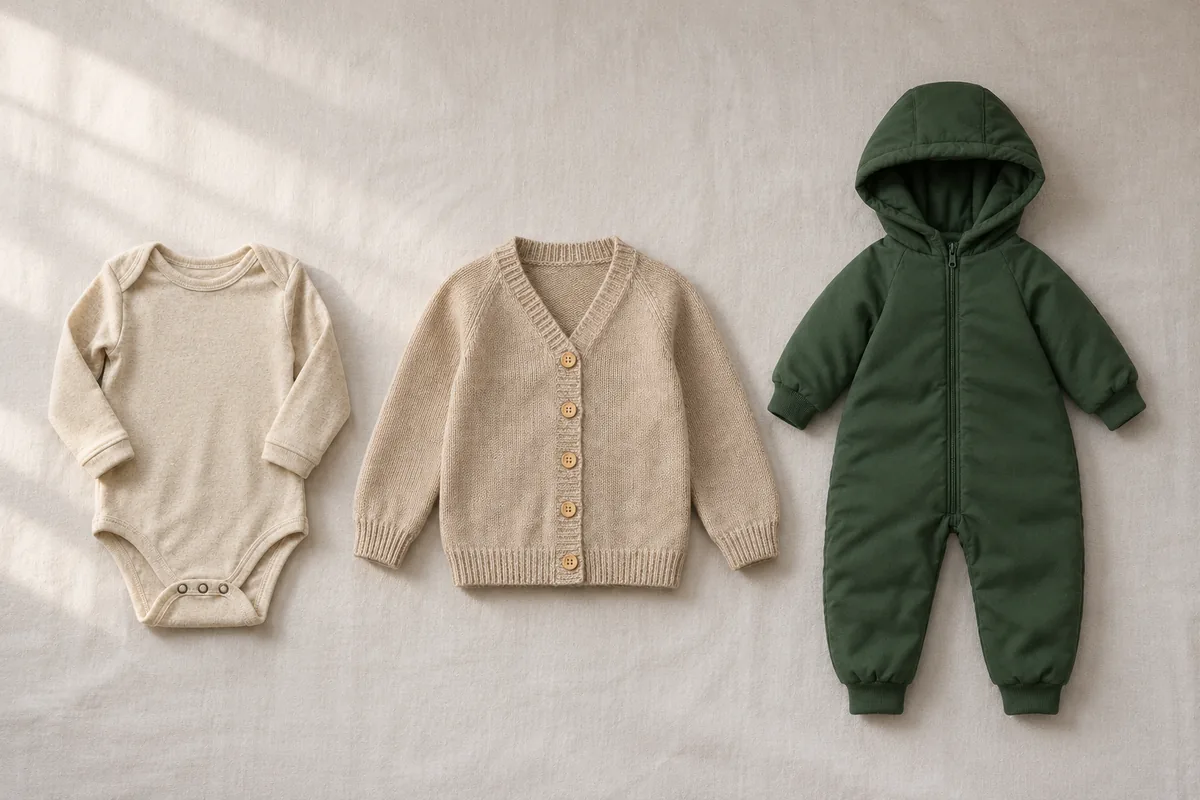
The first layer is close-fitting cotton: a bodysuit, T-shirt or leggings. The second is warm: a sweatshirt, cardigan or fleece-lined joggers. The third protects from wind and snow: a winter jacket or snowsuit.
To check if your child is cold, feel the back of the neck, not the hands or nose: if it's warm and dry, all is well. A damp neck means too many clothes.
Babies in a pram need one more layer than an adult. A child who's running around needs the same as you.
What to pack for coming home and the first month
Less than you think: babies grow so fast that size 56 is often worn for just a few weeks.
Read more
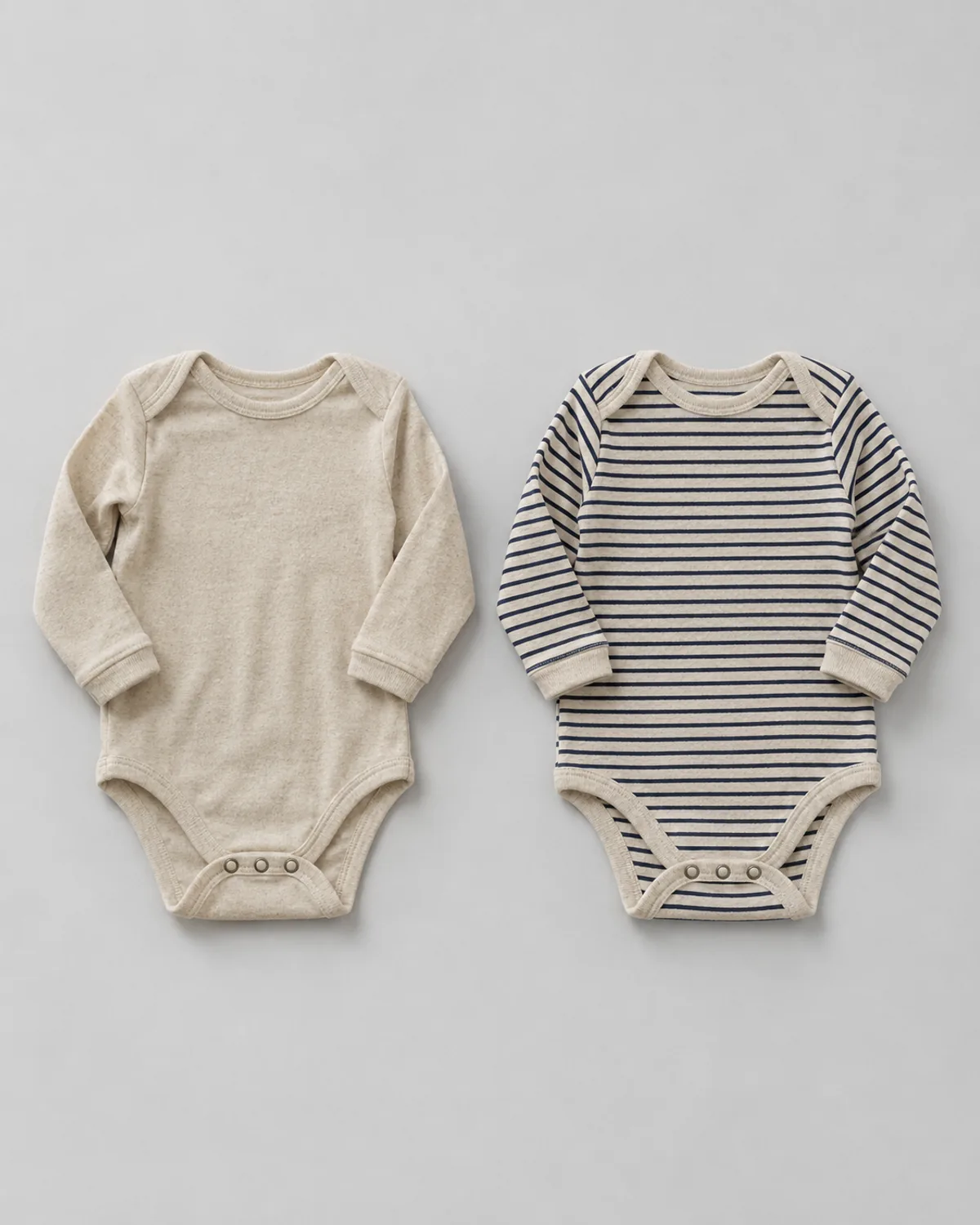
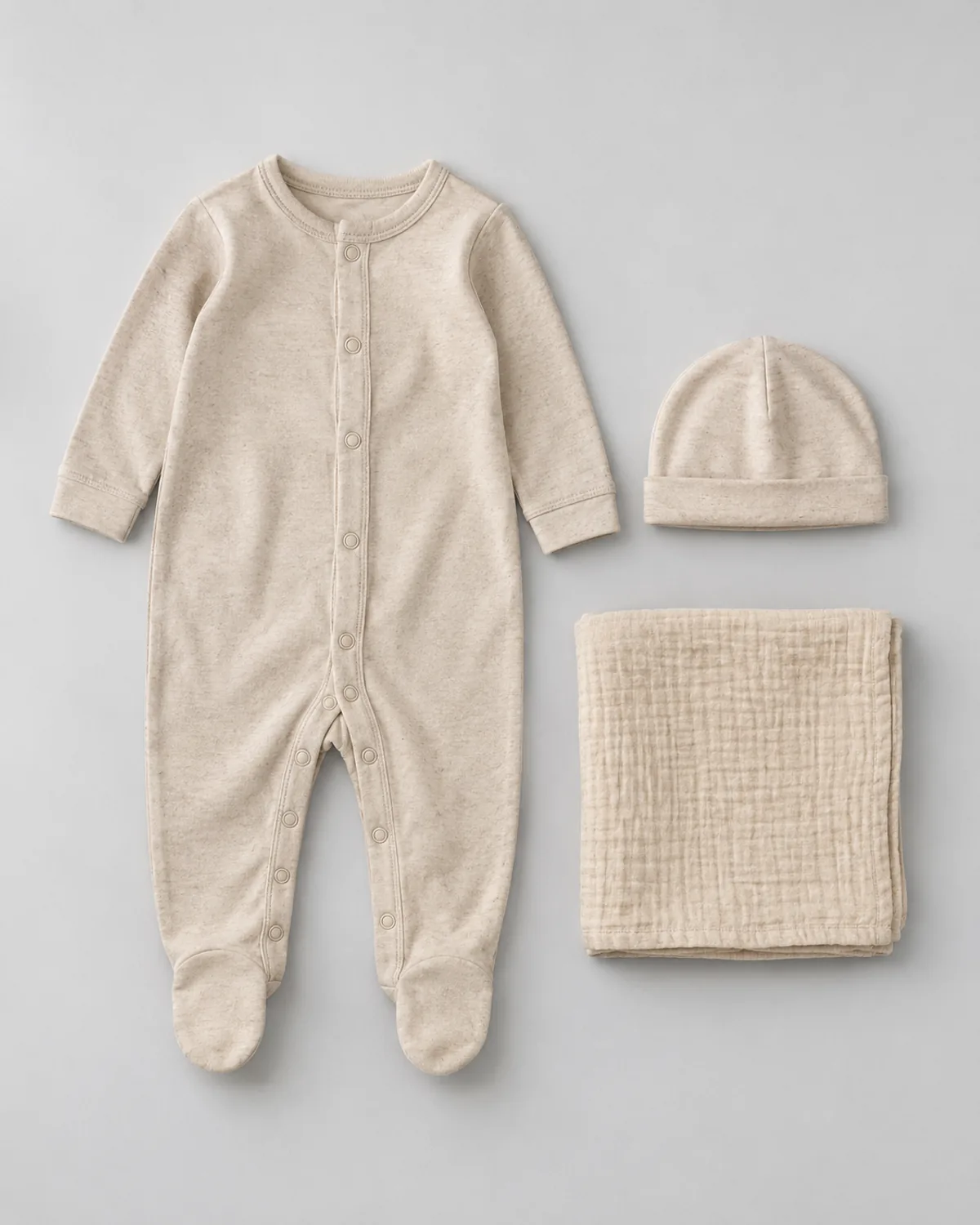
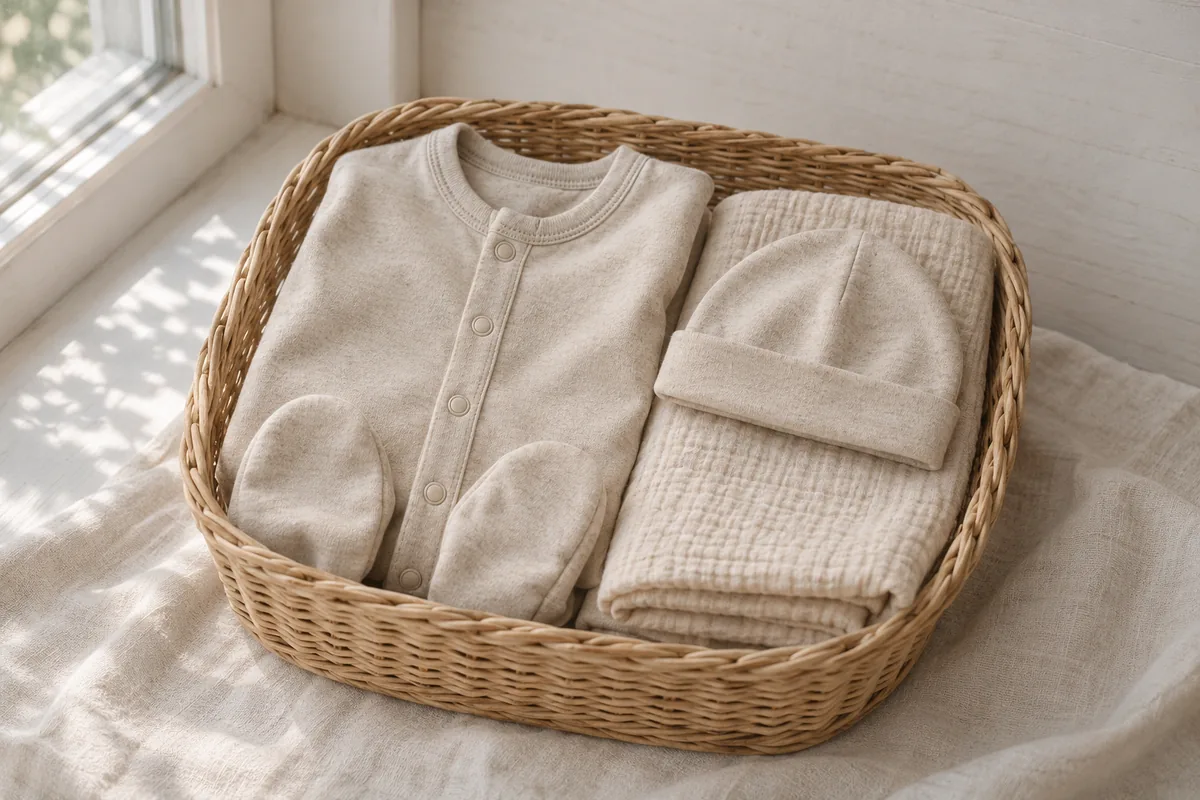
For coming home, a bodysuit, baby trousers, a hat and a snowsuit or bunting bag for the season are enough. Take size 56, or 62 straight away if your baby is big.
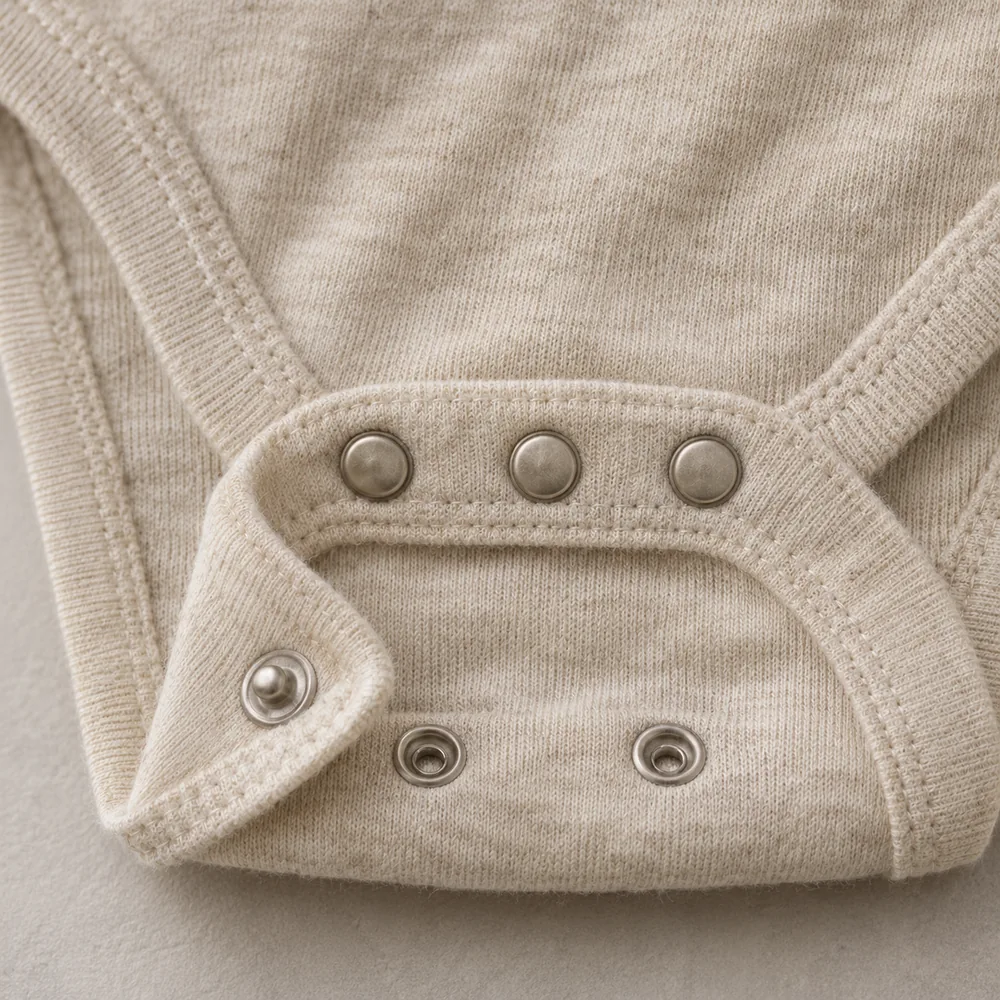
For the first month: 5–6 bodysuits, 4–5 pairs of baby trousers, 2 hats, 2 swaddles and a warm snowsuit if it's cold outside. Choose snaps at the bottom — changing is quicker.
Wash new clothes before the first wear, without fabric softener and with a baby detergent.